
Few birds capture the imagination quite like the Indian Paradise Flycatcher (Terpsiphone paradisi). With its long, ribbon-like tail and graceful flight, this bird looks like it flew straight out of a fairytale. Whether you are a birdwatcher, photographer, or simply curious about nature, the Paradise Flycatcher is a species that never fails to mesmerise.
🌿 A Quick Introduction
The Indian Paradise Flycatcher is a small to medium-sized passerine bird found across the Indian subcontinent and parts of Southeast Asia. It belongs to the monarch flycatcher family and is famous for its striking appearance and aerial agility.
What makes this bird truly unique is the dramatic difference between adults, juveniles, and different colour morphs—every sighting feels like meeting a new version of the same species!
🎨 A Bird of Many Colours
One of the most fascinating things about the Indian Paradise Flycatcher is its variety in plumage:
♂ Male (Adult)
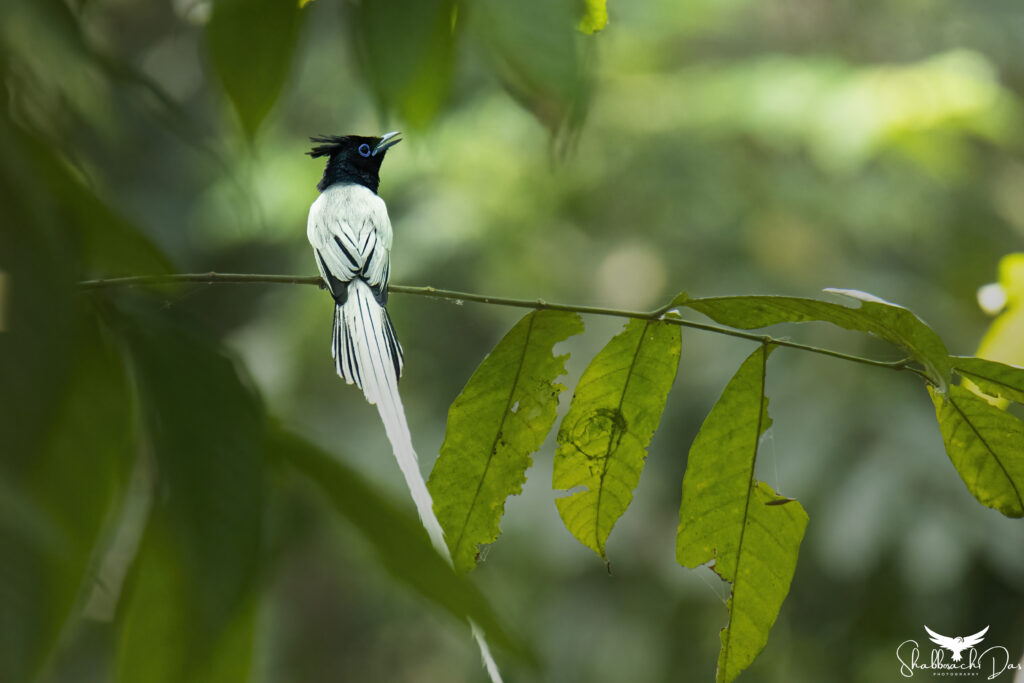
- Can be shiny black-headed or creamy white-headed.
- Body colour ranges from rufous (brownish) to pure white.
- The show-stopper: tail streamers that can grow up to 24–30 cm, flowing behind them like white silk ribbons.
♀ Female
- Smaller and shorter-tailed than males.
- Rufous wings and greyish underparts.
- Elegant and agile, though less flamboyant.
Juvenile
- Rufous overall with shorter tails.
- Often seen actively chasing insects near the canopy.
This dramatic shift in plumage across age and sex makes identification exciting for bird enthusiasts.
🌍 Distribution & Habitat
The Indian Paradise Flycatcher is widely distributed across:
- India
- Sri Lanka
- Bangladesh
- Nepal
- Myanmar
- Parts of Central Asia
Preferred Habitats
- Moist deciduous forests
- Evergreen forests
- Garden areas
- Woodlands
- Mangroves
They thrive anywhere with dense trees and plenty of insects to feed on.
🍃 Behaviour: Grace in Motion
These birds are known for their energetic and acrobatic hunting style. They usually perch quietly on a branch and suddenly dart out to catch flying insects in mid-air—a behaviour known as sallying.
Interesting Behaviors
- Males often perform aerial displays duringthe breeding season.
- They are extremely alert and fast, making them a fun challenge for wildlife photographers.
- They communicate with sharp, metallic calls: “chee-chee-chee”.
🐣 Breeding Season
Breeding usually occurs between May and July.
Nest
- A small, cup-shaped nest built using grass, cobwebs, and bark.
- Placed on a forked branch.
- Both parents take part in feeding the chicks—something heartwarming to watch.
Male flycatchers often sit on the nest with their long tail streamers hanging down like decorative tassels.
📸 Why Photographers Love It
The Indian Paradise Flycatcher is a dream subject because of:
- It’s long, flowing tail that creates motion blur in flight shots
- The contrast of white plumage against green forest backgrounds
- Its unpredictable but graceful hunting movements
Capturing this bird requires patience, timing, and luck—but the results are always worth it.
🌱 Conservation Status
The species is currently listed as Least Concern by the IUCN, thanks to its wide distribution. However, habitat loss and deforestation can still affect local populations.
Protecting forested areas is essential to ensure these winged jewels continue to thrive.
✨ A Symbol of Elegance in the Wild
The Indian Paradise Flycatcher stands out as one of Asia’s most visually stunning birds. Its beauty, grace, and charismatic behaviour make it a favourite among bird lovers. If you ever spot one—especially the pure white male with flowing tail feathers—it’s a moment you won’t forget. Black-naped Monarch is a simillar kinds of birds of Bangladesh.
Whether you’re documenting nature, blogging about birds, or exploring photography, the Indian Paradise Flycatcher is a species that reminds us just how magical wildlife can be.