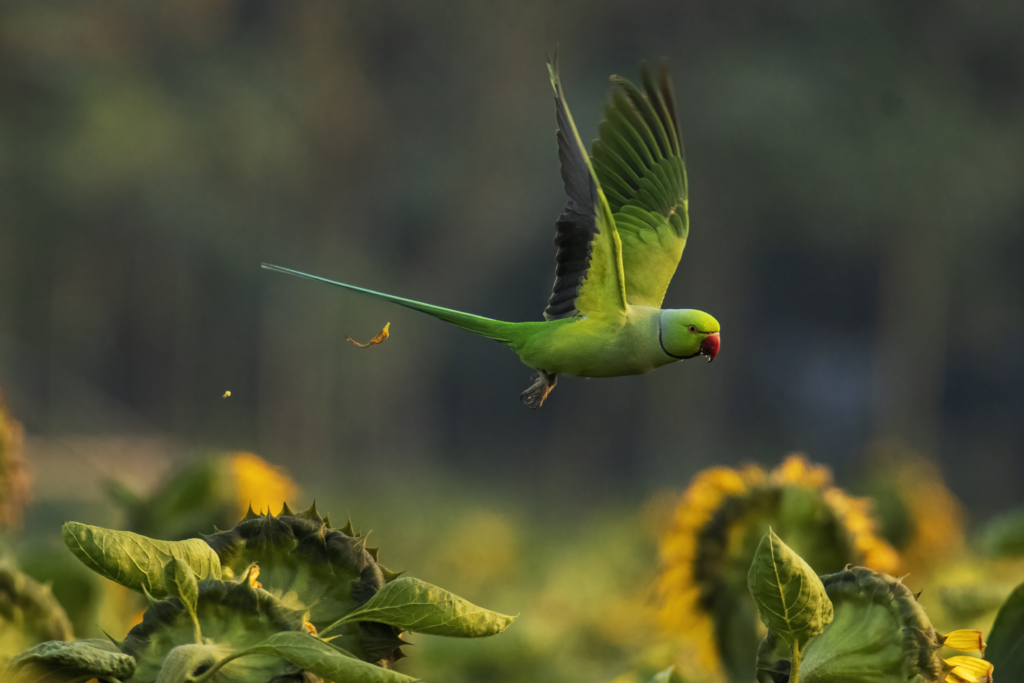

A sudden burst of green, a sharp, cheerful call, and a swift flight across the trees—this is the unmistakable Rose-ringed Parakeet (Psittacula krameri). Social, intelligent, and full of energy, this parakeet is one of the most familiar birds across South Asia and beyond, often seen brightening both forests and city life.
A Colourful and Confident Look
The Rose-ringed Parakeet is instantly recognisable by its vivid green plumage and long tapering tail. Adult males display a distinctive rose-pink and black ring around the neck, giving the species its name. Females and juveniles lack this complete ring, appearing slightly plainer but equally graceful.
Key features include:
- Bright green body with yellowish underparts
- Long bluish-green tail feathers
- Red, curved bill adapted for cracking seeds and fruits
- Sharp, expressive eyes
Habitat and Global Range
Highly adaptable, this parakeet thrives in a wide variety of habitats such as:
- Forest edges and woodlands
- Farmlands and orchards
- Urban parks, gardens, and roadside trees
Native to South Asia and parts of Africa, the Rose-ringed Parakeet has successfully established populations in many cities around the world, proving its resilience and intelligence.
Diet and Daily Life
The Rose-ringed Parakeet is primarily herbivorous, feeding on:
- Seeds and grains
- Fruits and berries
- Nuts and flower buds
Often seen in noisy flocks, these birds are highly social. Their loud calls, playful interactions, and acrobatic climbing make them fascinating subjects for observation and photography.
Breeding and Nesting Behaviour
During the breeding season, pairs choose tree cavities or old holes in buildings for nesting. The female lays several eggs and incubates them, while the male assists by bringing food. Once hatched, the chicks grow rapidly under attentive parental care.
Intelligence and Human Connection
This species is well-known for its high intelligence and ability to mimic sounds. Because of this, Rose-ringed Parakeets have long been associated with human settlements and culture. However, responsible wildlife appreciation is essential—these birds thrive best in the wild where they belong.
Conservation Status
The Rose-ringed Parakeet is classified as Least Concern, with stable and even increasing populations in many areas. Still, habitat destruction and illegal pet trade pose challenges in certain regions.
Why Birdwatchers Love the Rose-ringed Parakeet
- Bright colours are visible even from a distance
- Active, social behaviour is perfect for photography
- Common yet charismatic presence
- Strong association with both nature and urban life
Final Reflection
The Rose-ringed Parakeet is more than just a common green bird—it is a symbol of adaptability, intelligence, and freedom. Whether soaring across open skies or resting on a city tree, it reminds us that wildlife and human life often share the same space. You can see the most beautiful bird of Bangladesh, which is the Indian Paradise Flycatcher
Pause, listen to its call, and let the moment connect you with nature.