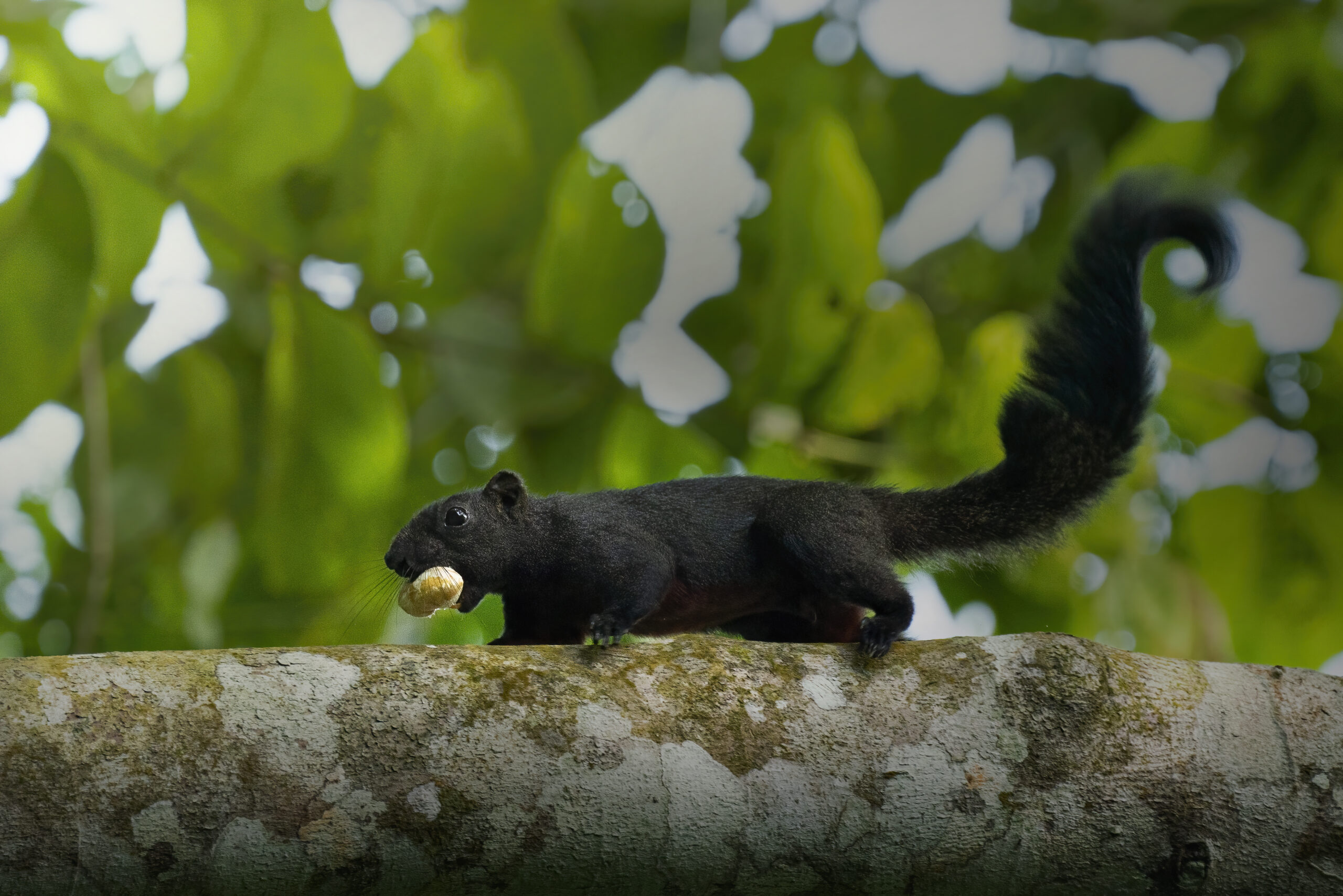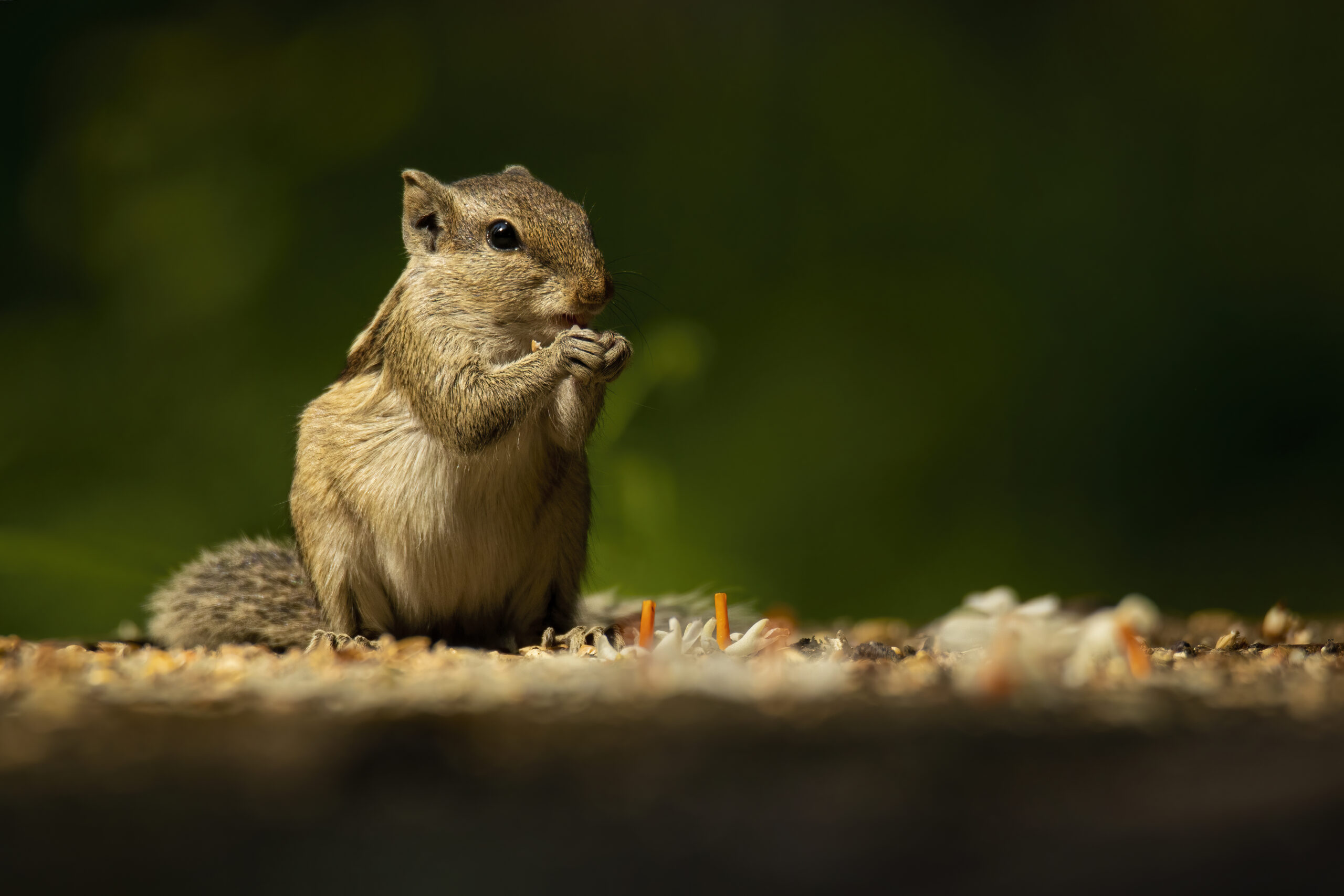
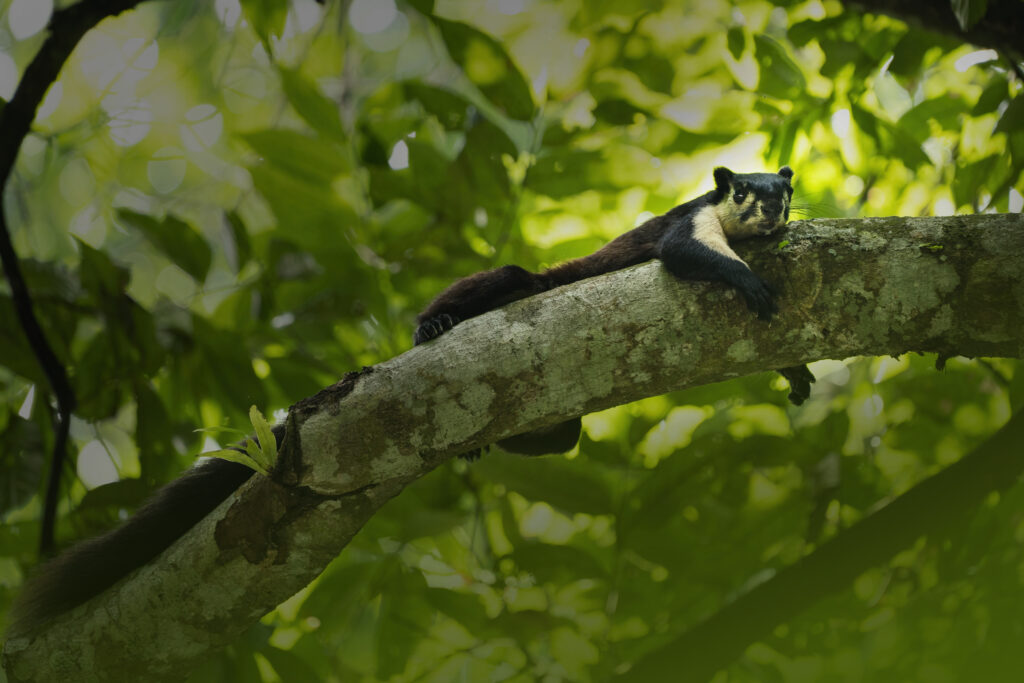

The Indian Giant Squirrel, scientifically known as Ratufa indica, is one of the most spectacular mammals found in the forests of India. Famous for its large size and vibrant fur colours, this arboreal squirrel lives high in the forest canopy and is rarely seen from the ground. See More Pictures of the Indian Giant Squirrel.
Scientific Classification
- Common Name: Indian Giant Squirrel
- Scientific Name: Ratufa indica
- Family: Sciuridae
- Order: Rodentia
- IUCN Status: Least Concern
Physical Appearance and Size
The Indian Giant Squirrel is among the largest tree squirrels in the world. Its fur displays striking combinations of:
- Deep maroon and chestnut
- Black and dark brown
- Cream or pale orange
It has a long, bushy tail, often equal to or longer than its body, which helps maintain balance while jumping between trees.
Habitat and Distribution
This species is endemic to India and inhabits:
- Tropical evergreen forests
- Moist deciduous forests
- Dense woodland canopies
It spends most of its life in tall trees and avoids open or disturbed areas.
Diet and Feeding Behaviour
The Indian Squirrel is primarily herbivorous, feeding on:
- Fruits and berries
- Seeds and nuts
- Flowers and tender bark
By storing and dispersing seeds, it plays a crucial role in forest regeneration.
Behaviour and Lifestyle
- Mostly solitary in nature
- Active during daylight hours
- Excellent climber and long-distance jumper
- Uses alarm calls to warn of predators
Despite its large size, it moves silently through the treetops.
Nesting and Reproduction
These squirrels build large leaf-and-twig nests called dreys, positioned high in the canopy. Females give birth to one or two young, raising them with great care in multiple nests for safety.
Ecological Importance
The Indian Giant Squirrel contributes to:
- Seed dispersal
- Forest biodiversity
- Healthy woodland ecosystems
Its presence often indicates a well-preserved forest environment.
Conservation Status and Threats
Although listed as Least Concern, the species faces threats from:
- Deforestation
- Habitat fragmentation
- Loss of mature forest trees
Forest conservation is essential for its long-term survival.
Why the Indian Giant Squirrel Matters
- One of Asia’s most colourful mammals
- A key indicator of forest health
- A rare and rewarding subject for wildlife photographers
- Symbol of rich forest biodiversity
Final Thoughts
The Indian Giant Squirrel is a living masterpiece of nature—silent, colourful, and agile. Hidden in the forest canopy, it reminds us that some of nature’s greatest wonders are found when we simply look up. Learn More about Bird Stories.