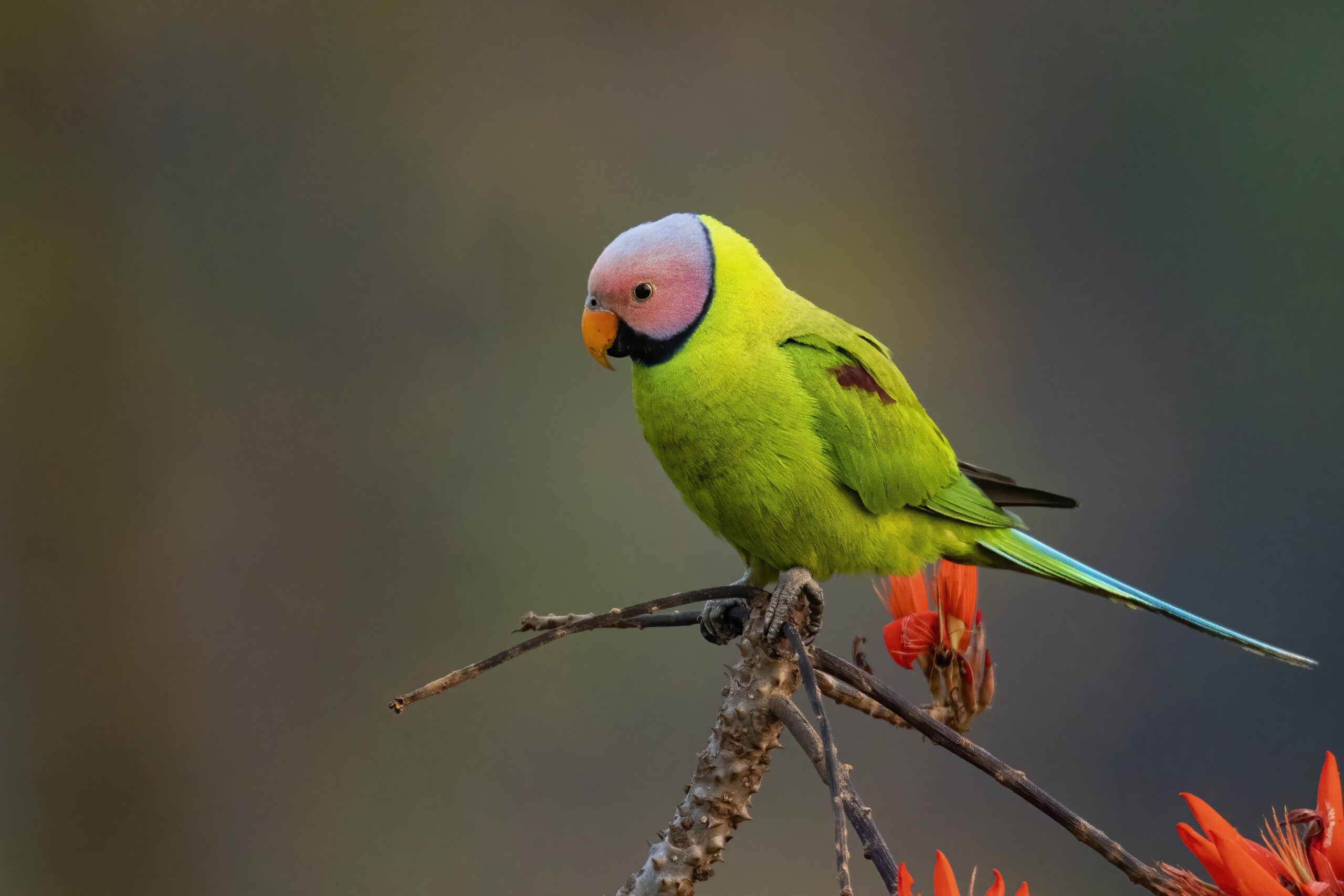
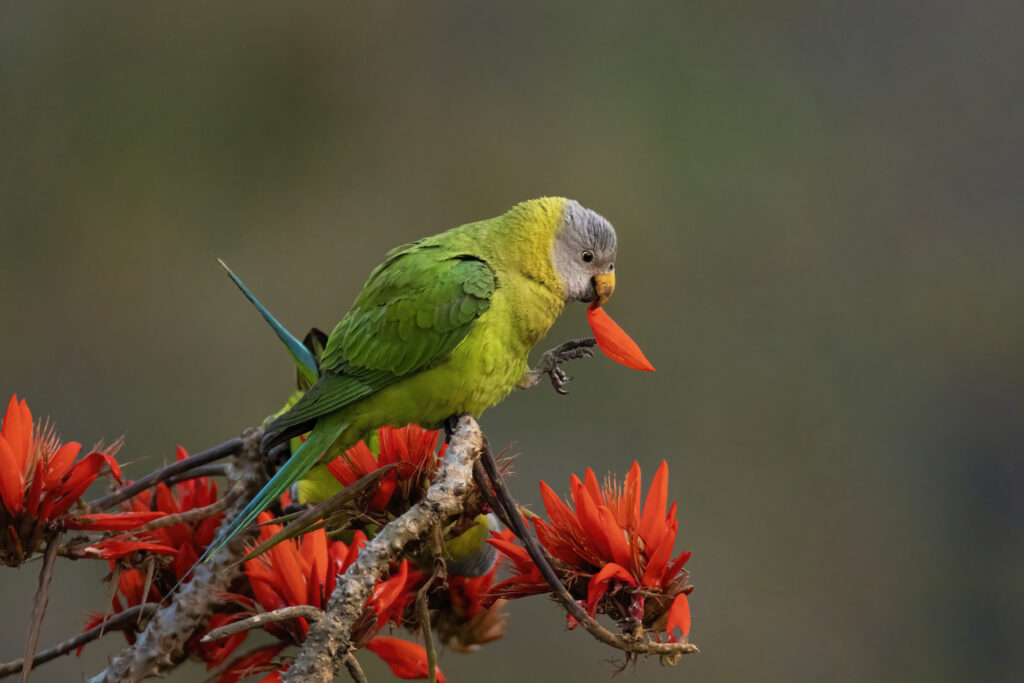

Graceful, colourful, and often overlooked, the Plum-headed Parakeet (Psittacula cyanocephala) is one of the most beautiful parakeets found in South Asia. With its soft pastel shades and gentle presence, this species adds elegance to forests, farmlands, and even city parks.
Scientific Classification
- Common Name: Plum-headed Parakeet
- Scientific Name: Psittacula cyanocephala
- Family: Psittaculidae
- Order: Psittaciformes
- IUCN Status: Least Concern
Physical Appearance and Identification
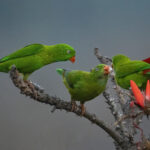
The Plum-headed Parakeet is medium-sized with a long tail and slender body. It is sexually dimorphic, making identification easier.
Male Features
- Plum-purple head
- Thin black neck ring with a pale blue border
- Green body with yellowish-green underparts
- Red upper beak with yellow tip
Female Features
- Greyish-blue head
- No distinct neck ring
- Duller bill colouration
Habitat and Distribution
This species is native to South Asia, commonly found in:
- India
- Bangladesh
- Nepal
- Sri Lanka
Preferred habitats include:
- Open woodlands
- Forest edges
- Agricultural lands
- Urban parks and gardens
Diet and Feeding Behaviour
The Plum-headed Parakeet is primarily herbivorous, feeding on:
- Fruits and berries
- Seeds and grains
- Flower buds
- Cultivated crops (occasionally)
They usually forage in small groups and are often seen feeding quietly compared to other parakeets.
Behaviour and Social Life
- Active during daylight hours
- Usually seen in pairs or small flocks
- Strong, fast flyers
- Communicate with soft, high-pitched calls
Unlike louder parakeets, they tend to be less aggressive and more reserved.
Breeding and Nesting
Breeding season typically occurs from February to April. Nests are made in:
- Tree cavities
- Old woodpecker holes
The female lays 3–4 eggs, and both parents participate in raising the chicks.
Ecological Importance
Plum-headed Parakeets contribute to:
- Seed dispersal
- Maintaining plant diversity
- Healthy forest ecosystems
Their presence is a sign of balanced woodland environments.
Conservation Status and Threats
The species is listed as Least Concern, but local populations may decline due to:
- Habitat loss
- Capture for the pet trade
- Agricultural conflicts
Forest conservation and responsible wildlife protection are essential. There are some other types of parakeets. The Rose-ringed Parakeet is one of the most available of them!
Why Birdwatchers Love the Plum-headed Parakeet
- Soft pastel colours, unlike other parakeets
- Clear difference between male and female
- Calm behaviour compared to noisy parrots
- Excellent subject for wildlife photography
Final Thoughts
The Plum-headed Parakeet is a gentle beauty—subtle yet unforgettable. Its soft hues and graceful flight bring quiet charm to South Asian landscapes. Protecting its habitat ensures that future generations can continue to enjoy this pastel jewel of the skies.