
Tiny, energetic, and brilliantly iridescent, the Purple Sunbird (Cinnyris asiaticus) is one of the most eye-catching birds found across South Asia. Often mistaken for a hummingbird because of its fast movements and nectar-feeding habits, this small bird flashes metallic purple-blue colors under sunlight, turning ordinary gardens into scenes of living beauty.
Whether hovering near flowers or singing from a rooftop perch, the Purple Sunbird brings energy and color wherever it appears.
Scientific Classification
- Common Name: Purple Sunbird
- Scientific Name: Cinnyris asiaticus
- Family: Nectariniidae
- Order: Passeriformes
- IUCN Status: Least Concern
Physical Appearance and Identification
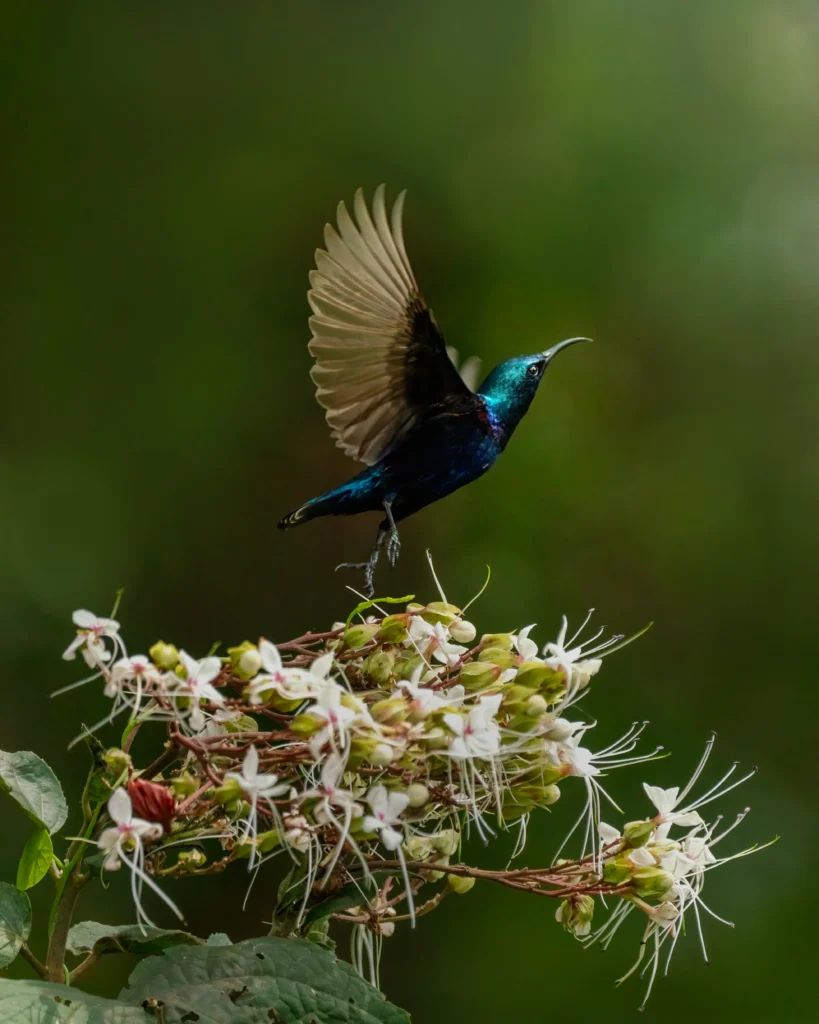
The Purple Sunbird is a small bird with a curved bill specially adapted for feeding on nectar.
Male Features (Breeding Plumage)
- Glossy metallic purple-blue body
- Black appearance in low light
- Long curved beak
- Fast fluttering flight
Female Features
- Olive-brown upperparts
- Yellowish underparts
- Smaller and less colorful than males
The male’s feathers appear different shades depending on sunlight and viewing angle.
Habitat and Distribution
Purple Sunbirds are widely distributed across:
- Bangladesh
- India
- Sri Lanka
- Pakistan
- Nepal and parts of Southeast Asia
They thrive in:
- Gardens and parks
- Forest edges
- Agricultural lands
- Urban neighborhoods
Their adaptability makes them one of the most common nectar-feeding birds in South Asia.
Diet and Feeding Habits
The Purple Sunbird mainly feeds on:
- Flower nectar
- Small insects and spiders
- Tiny fruits occasionally
Using its slender curved bill and specialized tongue, it extracts nectar from flowers while also helping with pollination.
Behavior and Lifestyle
Behavior Highlights
- Extremely active and fast-moving
- Often hovers briefly while feeding
- Territory around flowering plants
- Emits sharp, high-pitched calls
Males become especially aggressive during the breeding season while defending feeding territories.
Breeding and Nesting
Purple Sunbirds build beautiful hanging nests made from:
- Grass fibers
- Spider webs
- Leaves and soft plant material
The nests are usually suspended from thin branches, wires, or even human structures.
Breeding Facts
- Female lays 1–3 eggs
- Both parents may feed chicks
- Breeding often peaks during flowering seasons
Ecological Importance
Purple Sunbirds play a major role in:
- Pollination of flowering plants
- Maintaining garden biodiversity
- Supporting healthy ecosystems
Their constant movement between flowers makes them important pollinators.
Conservation Status and Threats
The Purple Sunbird is currently listed as Least Concern, with stable populations across much of its range. However, threats include:
- Habitat loss
- Excessive pesticide use
- Decline of flowering plants in urban areas
Creating bird-friendly gardens can help support local populations.
Why Birdwatchers Love the Purple Sunbird
- Stunning metallic plumage
- Fast and energetic behavior
- Easy to observe in gardens
- Excellent subject for bird photography
Watching sunlight reflect from a male Purple Sunbird’s feathers is a magical experience for any nature lover.
Final Thoughts
The Purple Sunbird may be tiny, but it carries the brilliance of a gemstone in flight. Its shimmering feathers, rapid movements, and important ecological role make it one of the most fascinating birds in tropical Asia.
The next time you notice flowers moving in the morning light, look carefully—you might spot this tiny purple jewel at work.