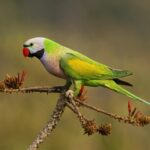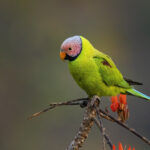
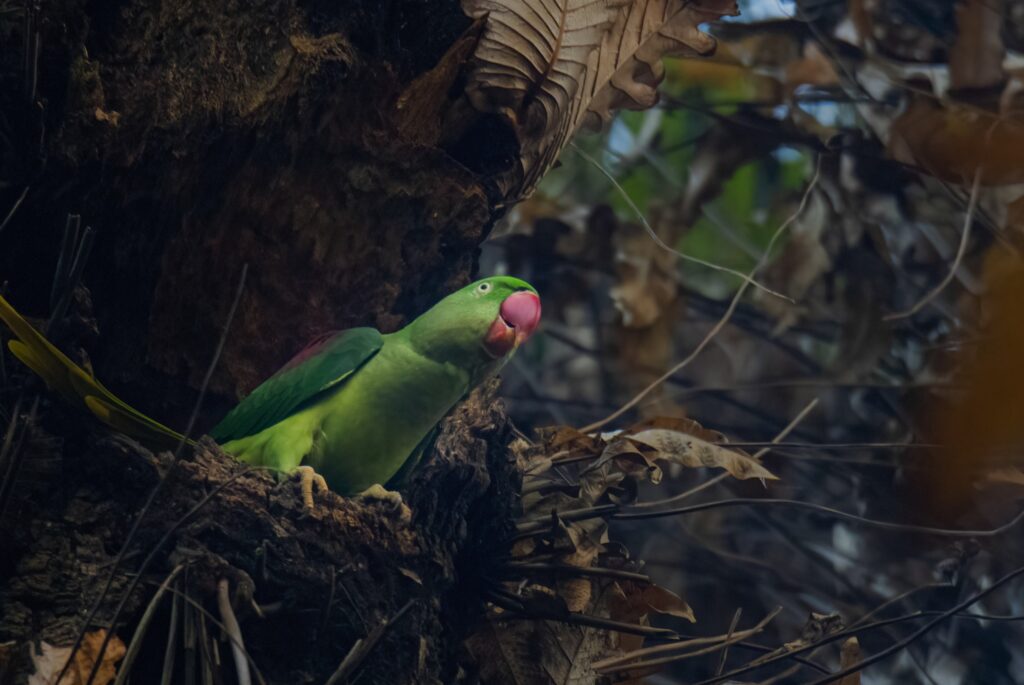

The Alexandrine Parakeet (Psittacula eupatria) is one of the largest and most regal parakeet species found across South and Southeast Asia. Known for its striking red shoulder patch and powerful presence, this intelligent bird has fascinated birdwatchers, photographers, and aviculturists for centuries.
Named after Alexander the Great, who is believed to have introduced these birds to Europe, the Alexandrine Parakeet carries both historical and ecological significance.
Scientific Classification
- Common Name: Alexandrine Parakeet
- Scientific Name: Psittacula eupatria
- Family: Psittaculidae
- Order: Psittaciformes
Alexandrine Parakeet Identification and Size
The Alexandrine Parakeet is often confused with the Rose-ringed Parakeet, but it is noticeably larger and more robust.
Key Identification Features:
- 🟢 Body Colour: Bright emerald green
- 🔴 Shoulder Patch: Distinct maroon/red patch on the wings (major identification mark)
- 🖤 Neck Ring (Male): Black and rose-colored ring around the neck
- 🔵 Tail: Long bluish-green tail with yellow underside
- 🔴 Beak: Large, strong, bright red
Size:
Approximately 56–62 cm (22–24 inches) including the tail, making it one of the largest parakeets in Asia.
🔍 Sexual Dimorphism:
Males have a clear neck ring, while females lack the prominent ring or show faint markings.
Habitat and Distribution of the Alexandrine Parakeet
The Alexandrine Parakeet is native to:
- Bangladesh
- India
- Sri Lanka
- Myanmar
- Thailand
- Cambodia
- Vietnam
- Laos
Preferred Habitats:
- Forest edges
- Woodlands
- Mangroves
- Agricultural areas
- Urban parks with large trees
In Bangladesh, they are commonly observed in forested regions and sometimes near cultivated lands where food is abundant.
Behavior & Intelligence
The Alexandrine Parakeet is highly intelligent and social. They are typically seen in:
- Small flocks
- Pairs during breeding season
- Large communal roosts
Behavioural Traits:
- Loud, sharp calls
- Strong and direct flight
- Excellent problem-solving ability
- Strong pair bonding
Because of their intelligence and ability to mimic sounds, they are sometimes kept as pets—though illegal trapping has negatively impacted wild populations.
Diet & Feeding Habits
The Alexandrine Parakeet is primarily herbivorous and feeds on:
- Fruits (guava, mango, papaya)
- Seeds and nuts
- Flower buds
- Cultivated grains
Their powerful beak allows them to crack hard seeds easily. However, they are sometimes considered crop raiders in agricultural areas.
Breeding & Nesting
- Breeding Season: November to April
- Nesting Sites: Tree cavities (especially old, mature trees)
- Clutch Size: 2–4 eggs
- Incubation Period: Around 24 days
Both parents take part in raising the chicks, and strong bonding is observed during the breeding cycle.
Conservation Status
According to the IUCN Red List, the Alexandrine Parakeet is classified as:
🟠 Near Threatened (NT)
Major Threats:
- Habitat destruction
- Deforestation
- Illegal pet trade
- Loss of mature nesting trees
Conservation efforts focus on habitat protection and stricter control of illegal trapping.
Wildlife Photography Tips 📸
If you’re hoping to photograph the Alexandrine Parakeet:
- Use a 400mm+ telephoto lens
- Visit forest edges during early morning
- Look for fruiting trees
- Capture the red shoulder patch in flight for dramatic shots
Their bold size and colourful markings make them a stunning subject for wildlife photography.
Interesting Facts
✨ Named after Alexander the Great
✨ One of the largest parakeets in Asia
✨ Can live over 25–30 years
✨ Known for strong beak strength
✨ Historically traded between Asia and Europe
Final Thoughts
The Alexandrine Parakeet stands as a symbol of Asia’s rich avian diversity. Its impressive size, vibrant colours, and remarkable intelligence make it one of the most captivating parrots in the wild. However, increasing habitat loss and illegal trade remind us of the urgent need for conservation awareness. There is another big parakeet in Bangladesh named the Red-breasted Parakeet.
Protecting old-growth trees and forest ecosystems ensures that this magnificent parakeet continues to thrive for generations to come.