
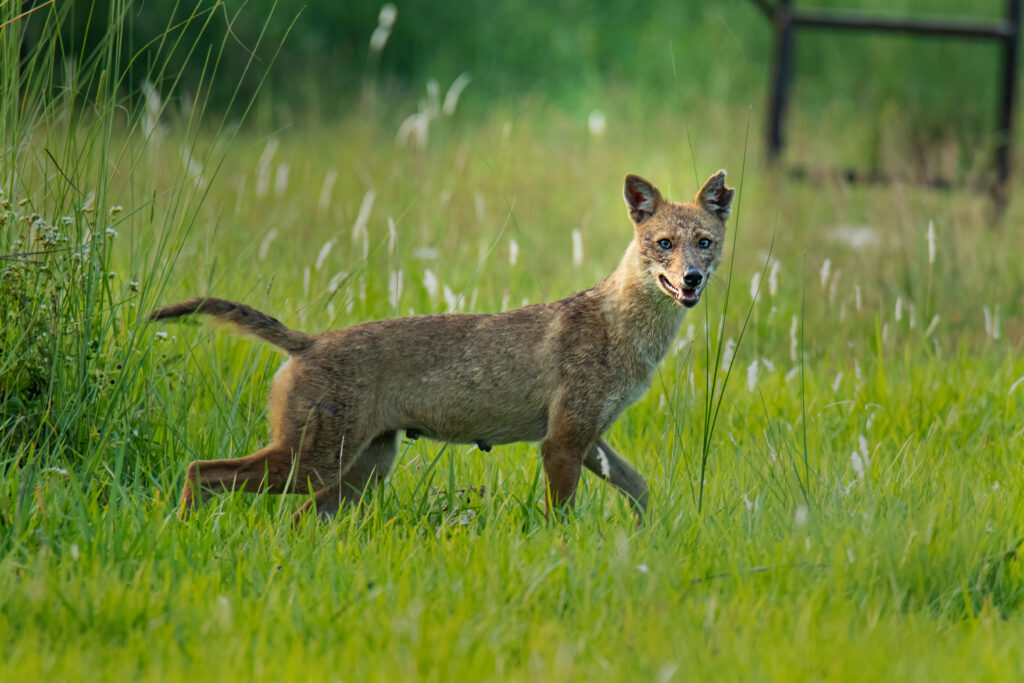

As dusk settles over grasslands and forest edges, a sharp call echoes through the air—alert, mysterious, and full of life. This is the voice of the Golden Jackal (Canis aureus), one of nature’s most adaptable and intelligent wild canids. Neither fully wolf nor fox, the golden jackal holds a unique place in the wild landscape of Asia, Africa, and Europe.
A Distinctive Appearance
The golden jackal has a slender yet sturdy body, built for endurance and agile movement. Its coat varies with the season:
- Golden-yellow to brown fur in summer
- Thicker, greyer coat in winter
- Bushy tail with a darker tip
- Sharp ears and bright, watchful eyes
This natural camouflage allows it to blend effortlessly into dry grasslands, scrub forests, and open countryside.
Habitat and Distribution
Golden Jackals are remarkably adaptable and can be found in:
- Grasslands and open forests
- Wetlands and riverbanks
- Agricultural areas and village outskirts
Their range spans South Asia, the Middle East, Southeast Europe, and parts of Africa. In countries like Bangladesh and India, they are often seen near rural landscapes where nature and human activity overlap.
Diet and Survival Skills
The Golden Jackal is an opportunistic omnivore, which is key to its survival. Its diet includes:
- Small mammals and birds
- Insects and reptiles
- Fruits and berries
- Carrion and food leftovers
This flexible feeding habit enables the jackal to thrive in dynamic environments where other predators may struggle.
Social Behaviour and Intelligence
Golden Jackals usually live in monogamous pairs or small family groups. They communicate using a range of calls, including their well-known howls, which help maintain territory and strengthen bonds.
Highly intelligent and cautious, jackals are excellent problem-solvers—traits that have helped them coexist near human settlements for centuries.
Breeding and Family Life
Breeding pairs form strong bonds. The female gives birth to pups in a hidden den, often dug underground or sheltered by thick vegetation. Both parents take care of the young, teaching them hunting and survival skills as they grow.
Ecological Importance
Often misunderstood, the Golden Jackal plays a vital role in the ecosystem by:
- Controlling rodent populations
- Cleaning up carrion
- Maintaining ecological balance
By doing so, it quietly supports healthier natural habitats.
Conservation Status
The Golden Jackal is currently listed as Least Concern. Its adaptability has allowed populations to remain stable, though habitat loss and human conflict remain challenges in some regions.
Why the Golden Jackal Matters
- Symbol of intelligence and survival
- Important scavenger and predator
- Fascinating subject for wildlife photography
- A reminder of nature’s balance near human life
Final Thoughts
The Golden Jackal is a true survivor—quiet, clever, and endlessly adaptable. Often heard more than seen, it represents the unseen strength of the wild. By understanding and respecting this species, we take one step closer to living in harmony with nature. There are more wild animals, like the Indian Giant Squirrel and many birds on my website.
Next time you hear a distant howl at twilight, remember—the wild is closer than you think.